この論文は、中国における大気汚染の長期的な傾向と現状に焦点を当てています。特に、北京市の微小粒子状物質(PM2.5)について紹介しています。中国におけるPM2.5に関する科学雑誌の年間発行数は、2000年以前にはゼロでしたが、過去2年間で100以上に増加しました。北京市のPM10濃度は、2001年の169 ± 94 µg/m³から2012年には109 ± 73 µg/m³に減少しました。
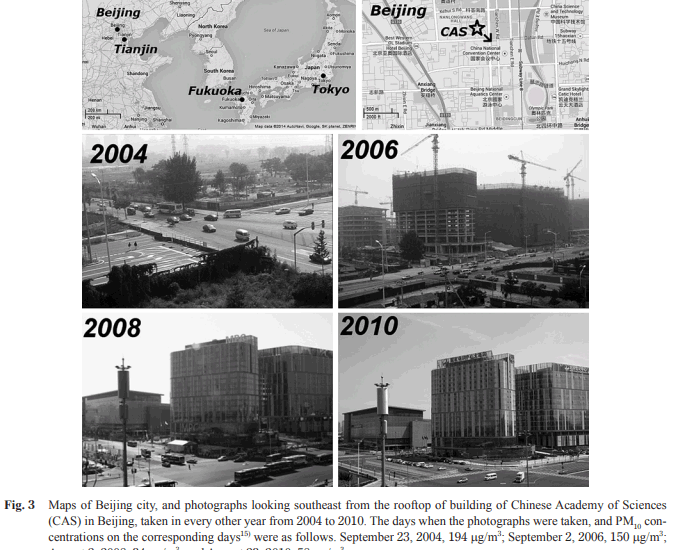
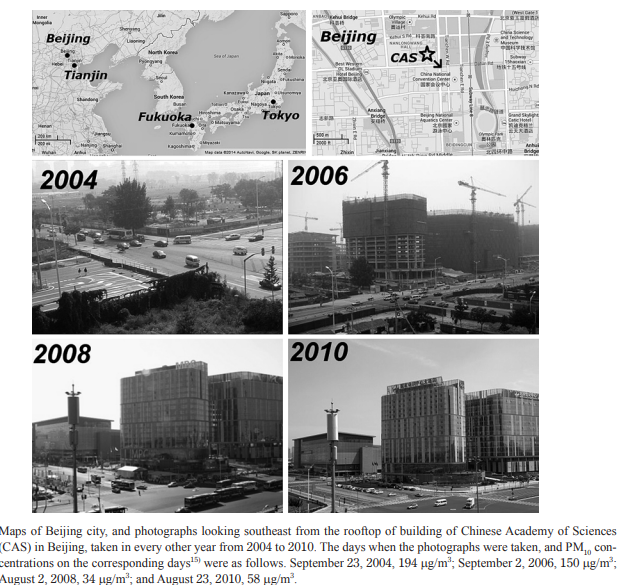
研究者は、北京市が中国の代表的な都市ではないことに注意すべきです。というのも、2008年の夏季オリンピック開催に伴い、特別に開発された都市だからです。PM2.5の濃度は、2010年4月から2013年10月までほぼ一定で、100 µg/m³のレベルを維持していました。ただし、2013年1月には月平均濃度が200 µg/m³と非常に高くなりました。この高度な汚染状況は、一時的な気象条件によるものであり、日本でのPM2.5濃度の上昇にはつながりませんでした。
PM2.5の化学組成は、2010年と2000年で類似していましたが、炭素系成分の含有量は、水溶性イオン成分と比較して、2000年から2010年の間に減少した可能性があります。2008年夏には、オリンピック関連の環境対策により、大気汚染物質の濃度が最大50%減少しましたが、2009年には再び増加しました。多くの中国都市がPM2.5の環境基準を満たすのは困難であり、その基準は他国と比べて厳しくないにもかかわらずです。中国の大気環境の状況は急激に変化するため、継続的なモニタリングが不可欠です。
This paper focuses on the long-term trend and current status of air pollution in China. In particular, fine particulate matter (PM2.5) in Beijing city was introduced. The annual number of scientific journal publications regarding PM2.5 in China has increased from zero before 2000 to more than 100 in the past two years. The concentrations of PM10 in Beijing have decreased from 169 ± 94 µg/m³ in 2001 to 109 ± 73 µg/m³ in 2012.
Researchers should note that Beijing is not a representative city of China because it was uniquely developed due to the hosting of the 2008 Summer Olympic Games. The concentrations of PM2.5 in Beijing have remained almost constant at a level of 100 µg/m³ from April 2010 to October 2013, except in January 2013, which showed remarkably high monthly average PM2.5 concentrations (200 µg/m³). This highly polluted situation was probably due to a temporary meteorological condition during that period, and it did not cause any elevation of PM2.5 concentration in Japan.
The chemical composition of PM2.5 in 2010 was similar to that in 2000; however, the content of carbonaceous species in PM2.5 was likely to have decreased from 2000 to 2010 when compared to water-soluble ionic species. The concentrations of air pollutants decreased by up to 50% in the summer of 2008 due to Olympic Game-related environmental control measures, but they increased again in 2009. It seems difficult for many Chinese cities to satisfy the ambient air quality standard for PM2.5, even though the standard is not strict when compared to other countries. Since the status of the atmospheric environment in China changes abruptly, continuous monitoring is mandatory.